
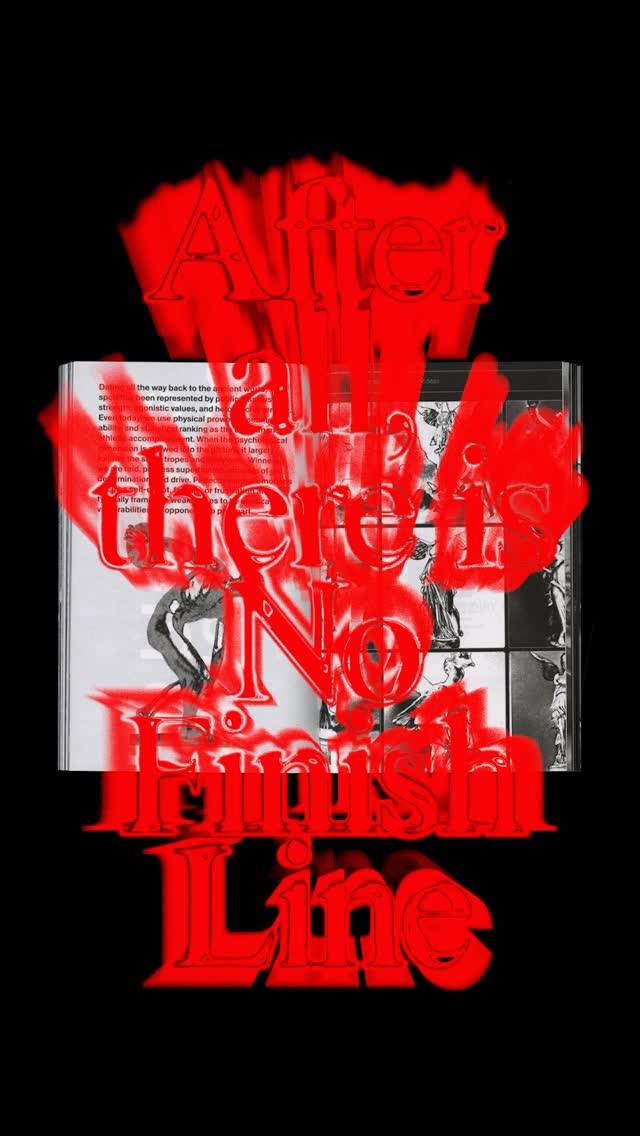
A Publisher From Provo, Utah Is Telling Nike Where It's Going
The most important design document Nike has released in the last three years is not a shoe. It is a 192-page, pocket-sized paperback retailing for $26, published out of Provo, Utah, by a two-person studio most people in the sportswear industry have never heard of.
"No Finish Line" is now in its third edition. That is not a footnote. That is the story.
The book sells out. Repeatedly. In a media environment where branded content is treated as disposable, a $26 paperback about Nike's design philosophy has gone back to press three times. The third edition, available now through Actual Source's own storefront and distributed to the UK and Europe via Antenna Books, is the clearest proof yet that Actual Source has built something that cannot be replicated by a larger publisher with a bigger budget.
Founded in 2015, Operating Out of a Suite in Provo
Actual Source was founded in 2015 by Davis Ngarupe, from the Cook Islands, and JP Haynie, an American designer based in Utah. Their studio address is Suite 103, 50 East 500 North, Provo, Utah 84606. Not Brooklyn. Not East London. Not Los Angeles.
That geography is not incidental. Actual Source has built a publishing identity specifically because it operates outside the centers of cultural gravity. The work is not filtered through the taste-making apparatus of New York or London. It arrives fully formed, without apology, from a state most design editors do not think about at all.
The studio describes itself as a publisher, brand, and bookstore that collaborates with contemporary artists and designers to release limited edition books, fonts, apparel, and objects. That description undersells what Actual Source actually does. Their recent catalog includes a publication produced with photographer Cait Oppermann for IBM, drawing on six years of access to IBM Research facilities in Almaden, Yorktown, and Zurich. Before that, an identity and typeface for NikeLab Chicago, commissioned by Virgil Abloh. And a publishing initiative for A24.
Three clients. One operating model. Zero redundancy.
192 Pages, Five Shifts, One Foreword From John Hoke
The specific argument of "No Finish Line" is worth stating plainly, because it is not a coffee-table book and should not be shelved with them.
The book was commissioned on the occasion of Nike's 50th anniversary. Nike's Chief Design Officer John Hoke wrote the foreword. Sam Grawe, who previously served as editor-in-chief of Dwell magazine and global brand director for Herman Miller before writing "Nike: Better Is Temporary" for Phaidon, contributed five essays describing the major shifts Nike's design philosophy will undergo in the coming decades. Those five shifts: product to platform, performance to promise, elite to everyone, sustainable to symbiotic, and static to sensorial.
Geoff Manaugh, the journalist and author known for his long-running BLDGBLOG, contributed speculative fiction. Illustrations are by Bráulio Amado. The whole thing was designed by Zak Group, the London-based studio that has worked with the German Pavilion at Venice, the 8th Berlin Biennale, and Paco Rabanne.
The ISBN is 979-8-9872648-0-5. The dimensions are 110 x 177mm. It fits in a coat pocket.
That last detail matters more than it might seem. Zak Group built the book to sit inside a tradition of experimental paperbacks from the 1960s and 70s. The physical object is a position statement. It says: serious ideas do not require weight.
Sam Grawe Interviewed a Dozen Nike Designers So You Don't Have To
The five-shift framework inside the book is not speculative in the loose, brand-speak sense. Grawe interviewed more than a dozen Nike designers, scientists, engineers, researchers, and leaders to build it. The essays touch on the LeBron James Innovation Center, a 750,000 square foot innovation hub designed by Olson Kundig, and Nike's stated goals on materials and sustainability.
That level of access, delivered through a $26 pocket paperback published by a 2-to-10-person studio in Utah, is genuinely unusual. Phaidon publishes "Better Is Temporary," the 320-page hardcover predecessor, at a significantly higher price point and with a very different reader in mind. "No Finish Line" made a different bet. It chose reach over prestige.
Three editions in, that bet is paying off.
The Actual Source Model Is Not a Publishing Model. It's a Cultural Infrastructure Model.
Here is the thing about Actual Source that most coverage misses: the books are not the product. The relationships are the product.
The studio has worked with Virgil Abloh, A24, IBM, and Nike. Not as a vendor. As a collaborator. The distinction matters because it changes what the output looks like. A vendor produces a deliverable. A collaborator produces a position.
JP Haynie and Davis Ngarupe were invited to speak at the Walker Art Center's 2025 Insights Lecture Series in March of that year. Not to talk about books. To talk about how a project like the IBM Research publication gets made and becomes physical. The Walker is not in the habit of inviting printers to give lectures.
Actual Source has built, over a decade, the cultural authority that most publishers spend millions trying to manufacture. They did it by being precise about who they work with and uncompromising about what the work looks like.
The "No Finish Line" third edition is stocked at Antenna Books for UK and European distribution, a bookseller whose curatorial reputation is itself a form of endorsement. Getting a third print run into Antenna is not something a brand-funded vanity project achieves.
The Prediction Is Not About Nike
The third edition of "No Finish Line" arrives at a specific moment in Nike's corporate history, one where the company's design identity is under more scrutiny than at any point in the last decade. The book itself, commissioned to celebrate 50 years and project the next 50, now reads somewhat differently than it did at first publication in 2023.
But that tension is not a weakness of the book. It is the book's most interesting quality. "No Finish Line" is a primary document, a record of what Nike's most senior design leaders believed about their trajectory at a specific moment. The fact that a third edition exists means the market has decided that document is worth reading again.
The prediction here is not about Nike. It is about Actual Source. A studio founded in 2015, operating out of a Suite 103 in Provo, Utah, with a client roster that includes Virgil Abloh, A24, IBM, and Nike, a Walker Art Center lecture, and a three-edition book that sells out, is not a design studio anymore. It is a cultural institution that has not yet been named as one.
When the name finally catches up to the work, expect the access to get harder and the waiting list for the books to get longer.