
$10 Million Bought a Building. Wild Cherry Is What They Built Inside It.
The hardest table in New York right now seats 45 people, costs nothing to enter, and sits inside a 102-year-old theater that a film studio bought for $10 million in 2023. That is not a concept. That is a calculation.
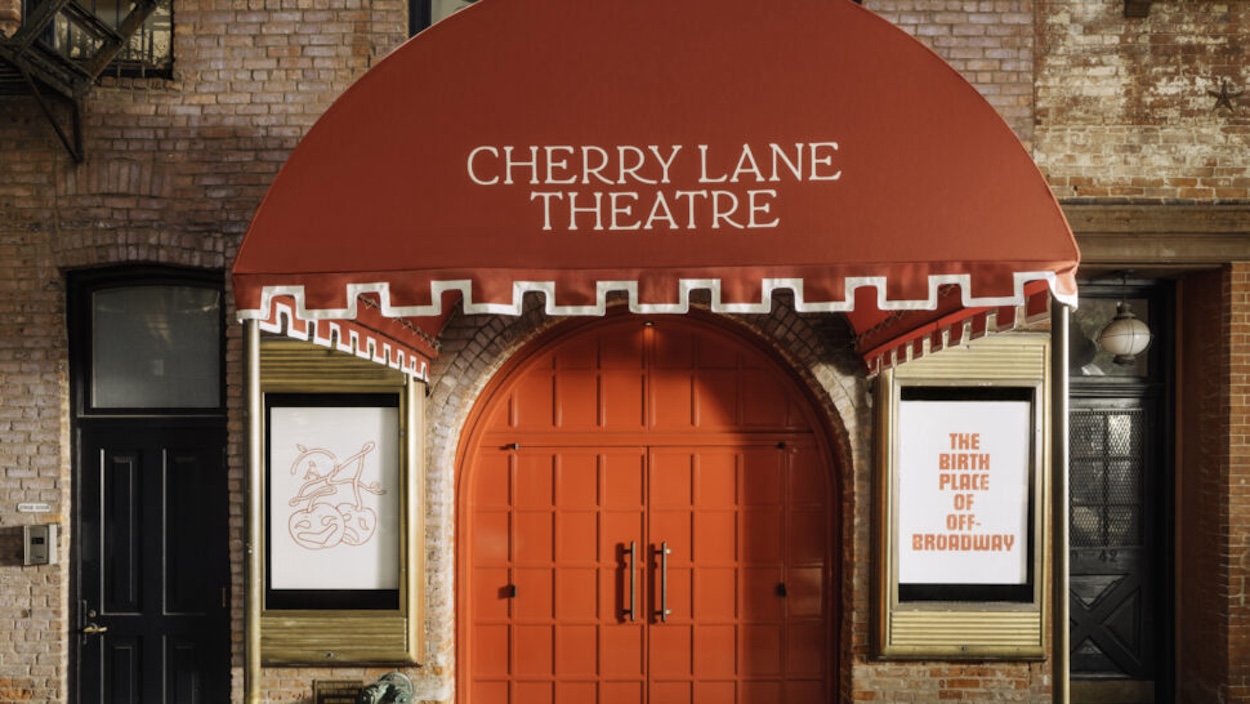
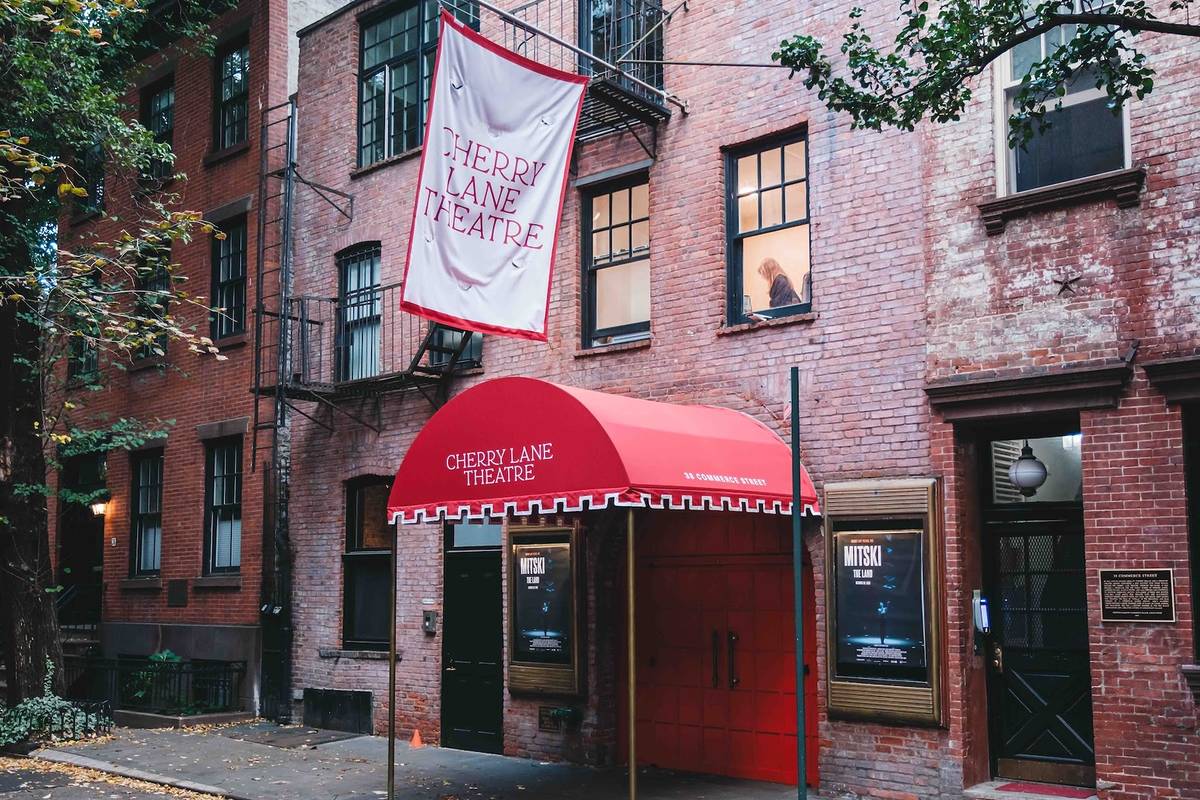
In March 2023, a partnership between film studio A24 and global private equity real estate firm Taurus Investment Holdings purchased the Cherry Lane Theatre for a little over $10 million. The purchase was framed as a cultural preservation move. It was also, plainly, an expansion play. A24 had secured a $225 million equity investment to fund a strategic growth plan, with stated plans to develop high-quality initiatives "beyond the screen." Buying a theater was the first move. Opening a restaurant was the second.
The two decisions, taken together, describe something the industry has not yet named properly. Not hospitality. Not entertainment. Something closer to total environment design.
1923, Then Silence, Then Sofia Coppola
The Cherry Lane building was constructed as a farm silo in 1817, also serving as a brewery, tobacco warehouse, and box factory before being converted into a theater. It opened in 1923. For the century that followed, the theater provided a home for theatrical figures including Samuel Beckett, Harold Pinter, Edward Albee, Clifford Odets, Tennessee Williams, Eugene Ionesco, Sam Shepard, and David Mamet. Then came the financial walls. Then came A24.
The theater underwent a $2.3 million renovation and reopened under A24's ownership in September 2025, beginning its inaugural season with a run of Natalie Palamides's one-person show, "Weer." The reopening week pulled Spike Lee, Jodie Foster, and Sofia Coppola into the building. The Red Door Reopening week included theater, comedy, music, and film events, culminating in the launch of a regular film screening series hosted by Sofia Coppola, "Sundays with Sofia," which kicked off September 14 with Adrian Lyne's Foxes.
Coppola curating a film series in a West Village theater is the ambient branding A24 cannot buy with an ad budget. Wild Cherry is the room you walk into after.
Two Chefs Who Waited Thirty Years to Open Their Own Place
The restaurant story starts in 1993. Riad Nasr, a native of Montreal, worked with Michel Bras in France before moving to New York City to help open Restaurant Daniel. Lee Hanson, a veteran of restaurant kitchens since the age of 14, joined Daniel Boulud at Le Cirque out of culinary school, before cooking with Charlie Palmer at Aureole and Jean-Georges Vongerichten at Vong. They found each other at Daniel's kitchen, and the rest was a long apprenticeship in someone else's empire.
The pair were tapped by restaurateur Keith McNally to open Balthazar in 1997 as co-executive chefs. This was followed by Pastis, Schiller's Liquor Bar, and Minetta Tavern, where they received three stars from The New York Times and a Michelin star. For over two decades they were the best chefs in rooms with someone else's name on the door.
In 2018, Hanson and Nasr realized their long-held dream to open their own place: Frenchette in Tribeca. The restaurant was awarded three stars by The New York Times. In 2019, Frenchette won the James Beard Award for Best New Restaurant and was named a Best New Restaurant by Food and Wine Magazine.
Then Le Rock at Rockefeller Center. Then Le Veau d'Or on the Upper East Side. Each restaurant has been named to The New York Times "100 Best Restaurants in New York City" list since the list's inception in 2023. In 2025, Conde Nast Traveler named Le Veau d'Or to their Hot List of the Best New Restaurants in the World. Le Veau d'Or was also named number 10 on S. Pellegrino's list of the 50 Best Restaurants of North America.
The accumulation matters. By the time Wild Cherry opened, Hanson and Nasr were not emerging talents. They were the most decorated active restaurateurs in New York City.
In 2025, Riad and Lee together received the James Beard Award for Outstanding Restaurateur, one of the industry's highest honors. The win marked the first time in eight years that the prestigious restaurateur honor went to New Yorkers.
45 Seats, a 12-Seat Horseshoe Bar, and a $86 Scorpion Bowl
The room is not large. That is the point.
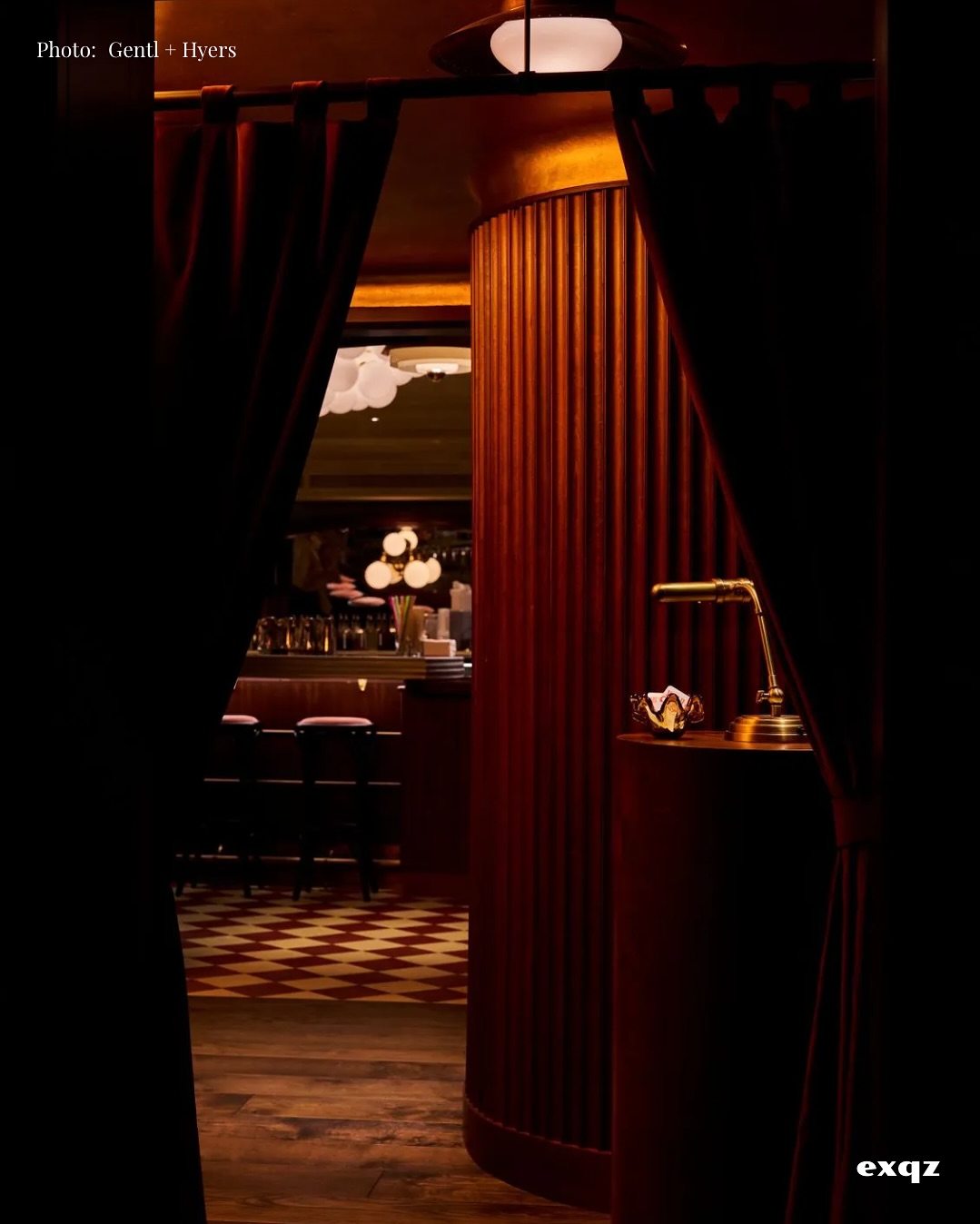
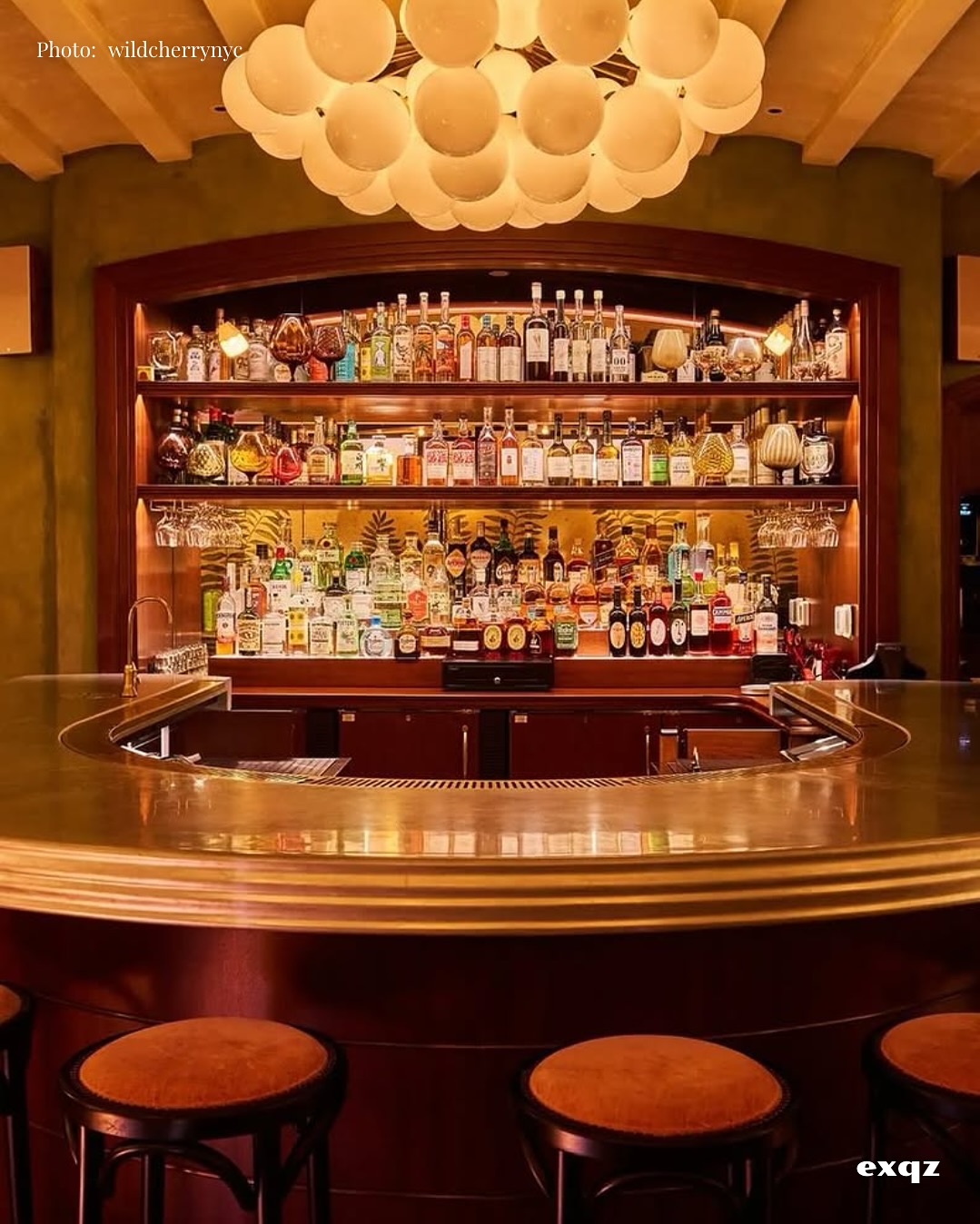
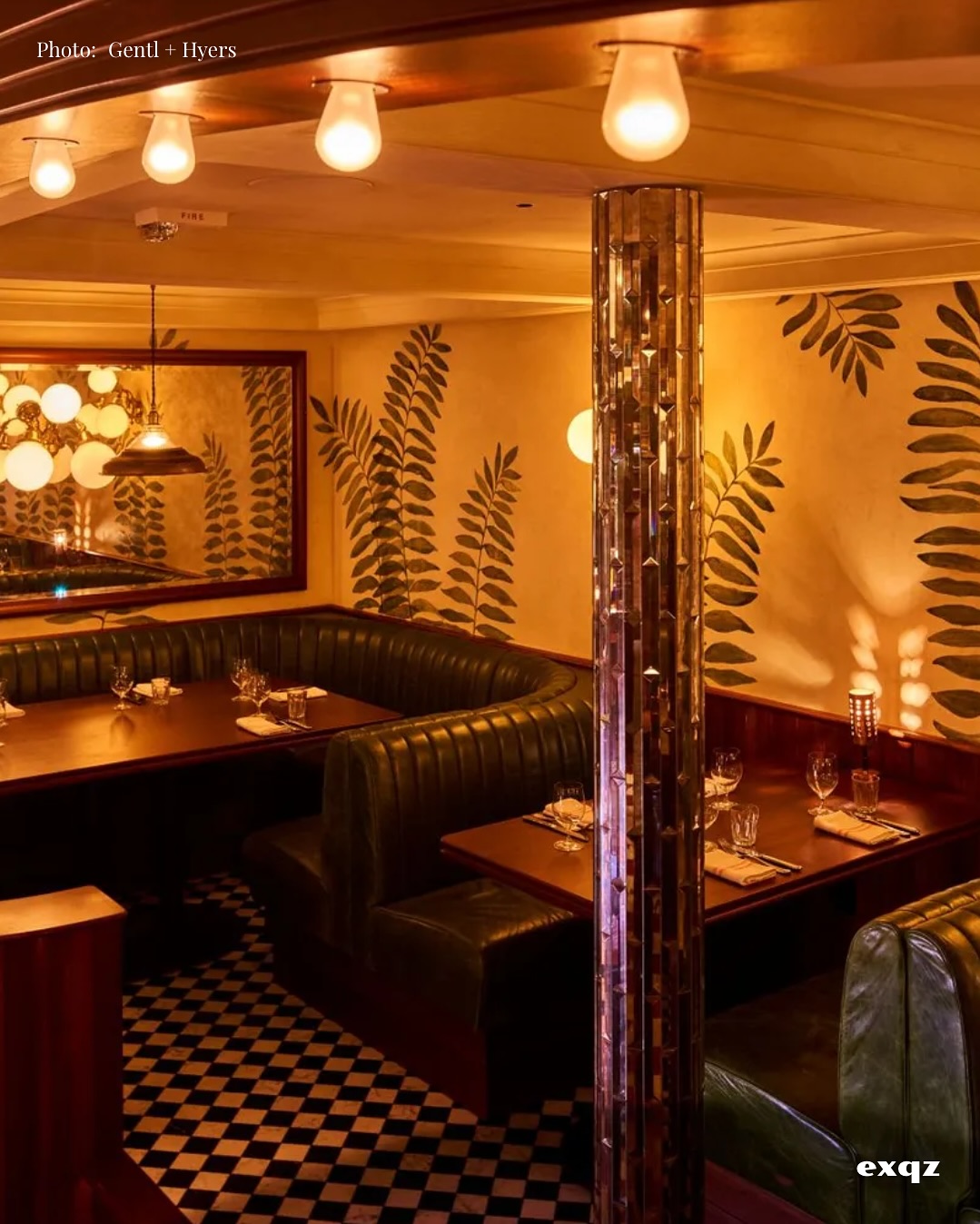
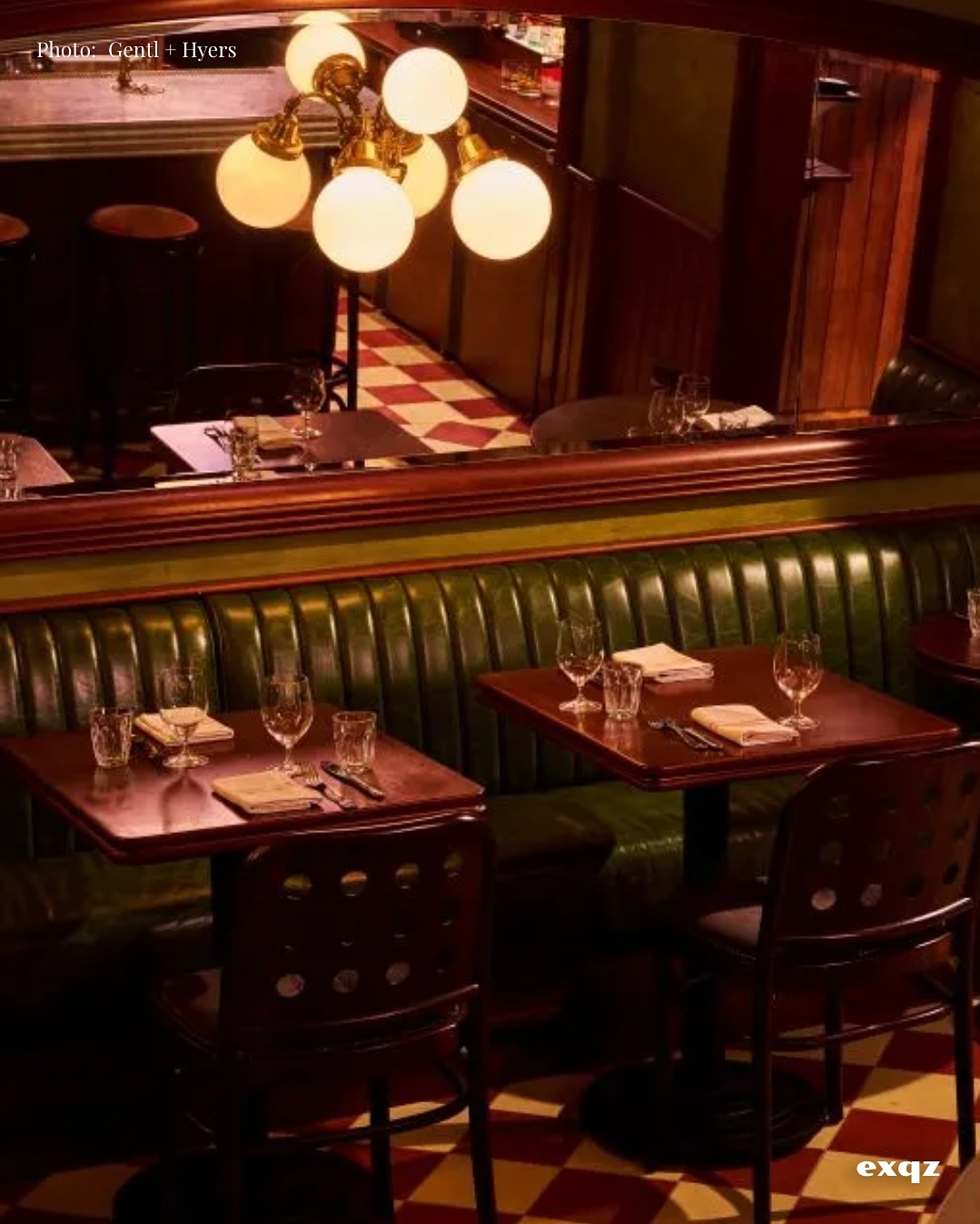
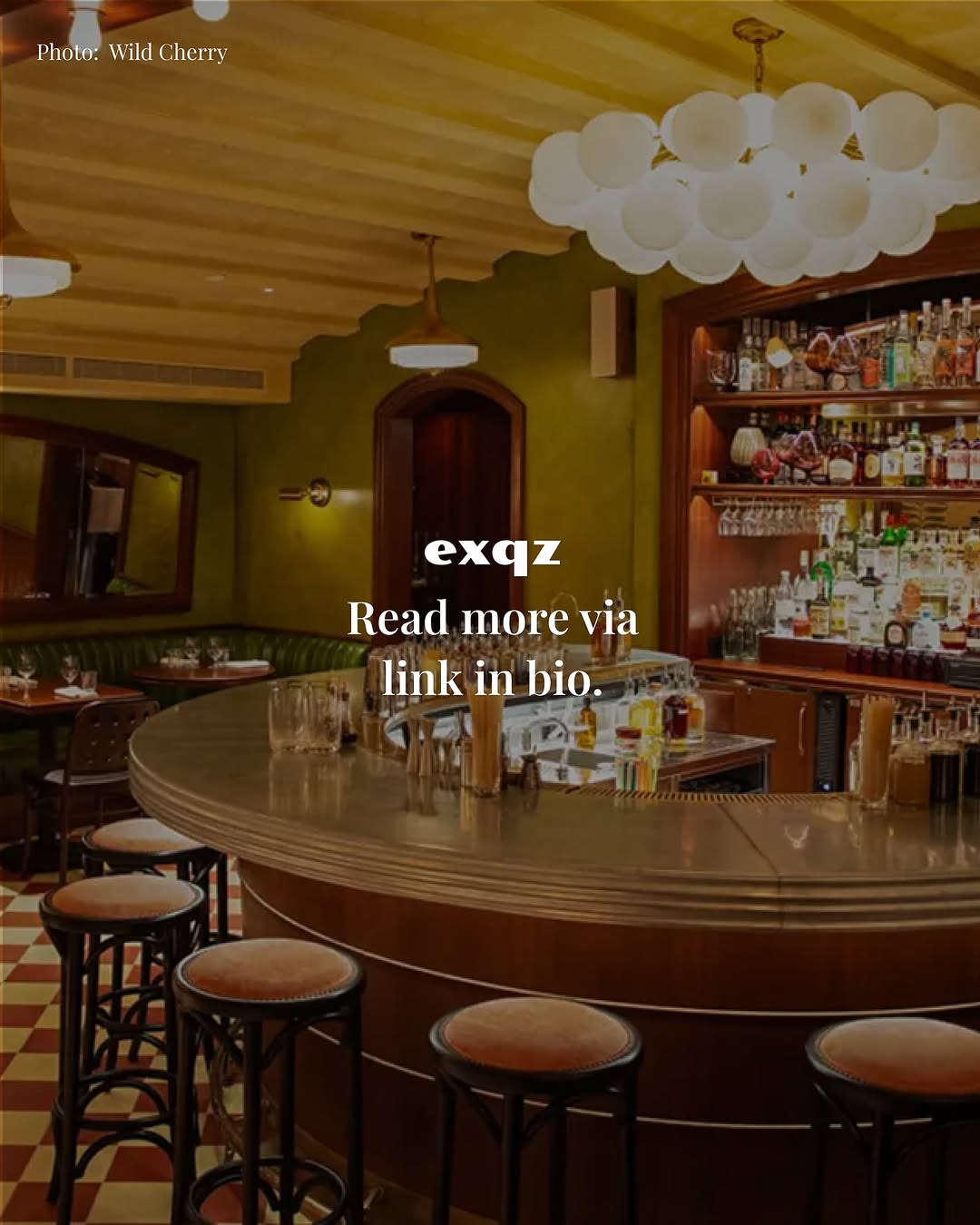
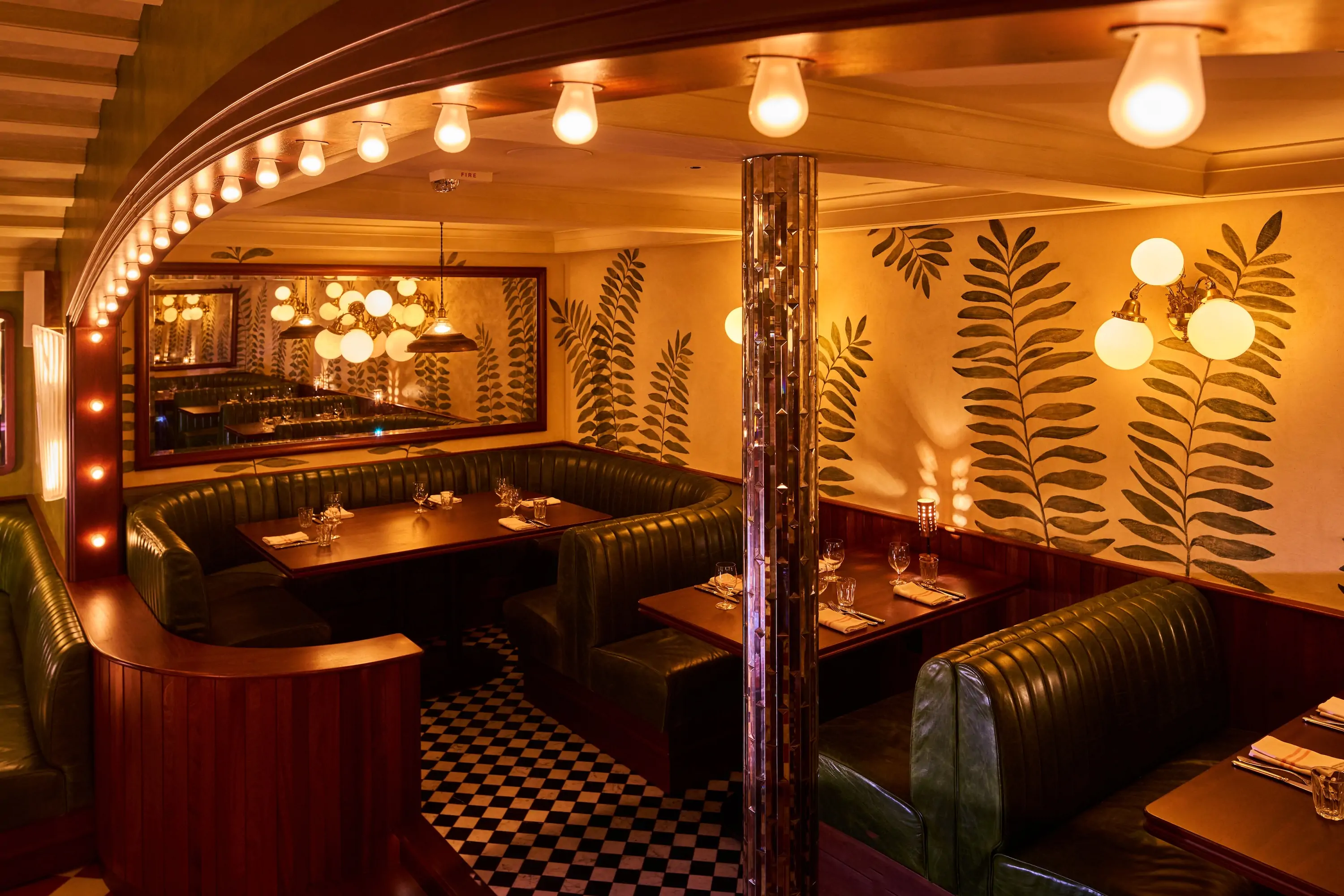
Situated within the renovated Off-Broadway theater, Wild Cherry fittingly pairs with A24's signature understated aesthetic. Created by designer Zeb Stewart, the 45-seat dining room features deep green banquettes, limewashed walls, and a slatted ceiling that casts a moody glow. Chequerboard floors and funfair-style bulbs nod to retro diners, while a striking 12-seat horseshoe bar anchors the space.
Zeb Stewart, for context, designed Hotel Delmano and Cafe Colette in Brooklyn, and Frenchette itself. He is not a neutral hire. He is the person Hanson and Nasr call when the brief is: make this feel like it has always existed.
Part psychedelic diner, part Hollywood supper club, Wild Cherry is a place where a sweater draped over the shoulders is proper attire for sipping a mai tai, and dinner veers from frog legs kiev to fettuccine alfredo. That description sounds incoherent. In the room it reads as total conviction.
The menu balances seafood starters such as oysters, tuna crudo, and Bang's Island mussels with heartier offerings, including a lobster club sandwich, roasted monkfish kebab, and a cheeseburger developed by the same chefs who created the famed Minetta Tavern Black Label burger. That last detail is not casual. The Minetta Black Label is one of the most referenced burgers in New York culinary history. Its creators are now doing a version at a supper club behind a stage.
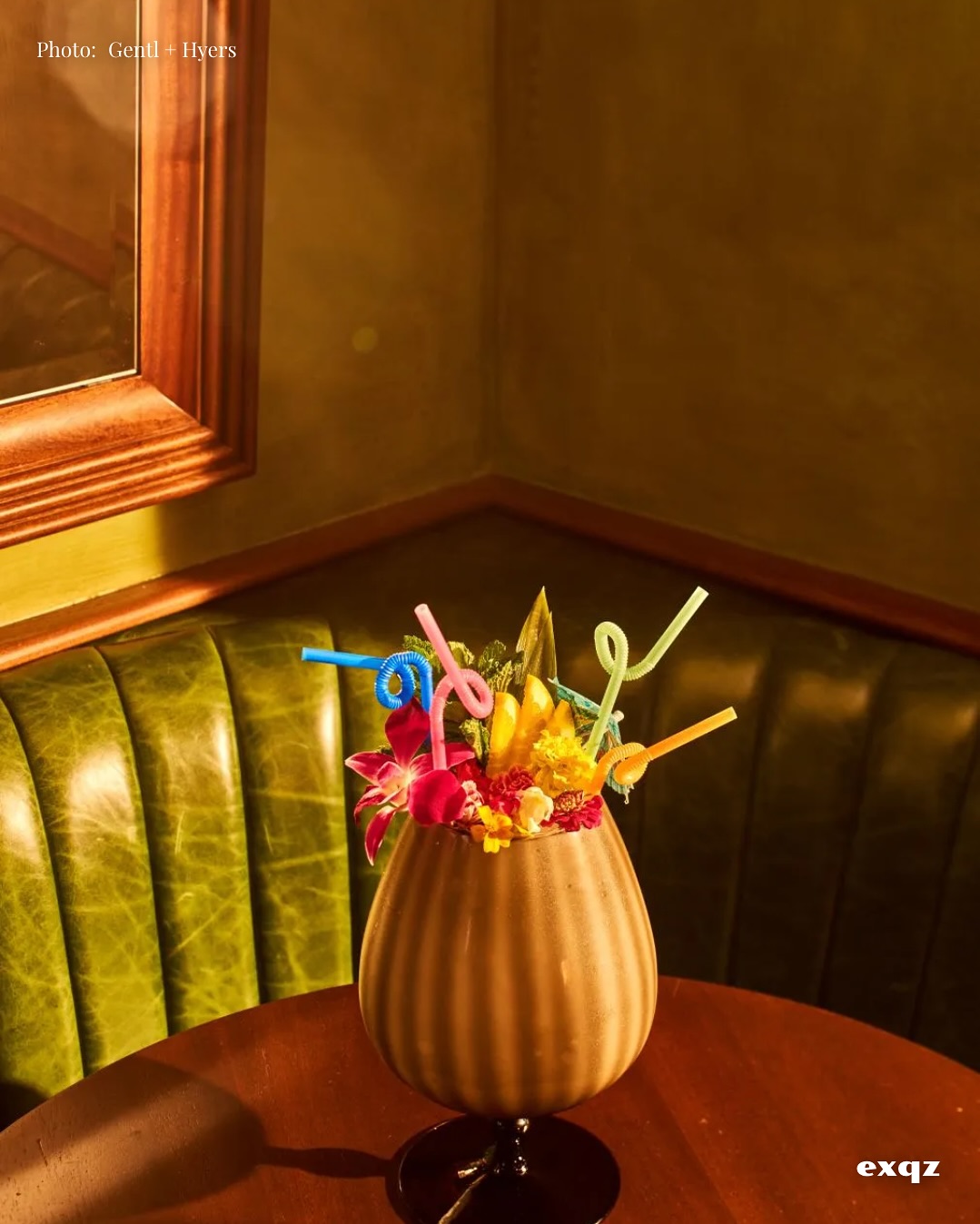
The shareable Scorpion Bowl is allegedly a Riad favorite, priced at $86. James Beard-nominated wine director Jorge Riera has assembled a list focused on natural wines from small French producers. A $86 shared cocktail at a 45-seat restaurant inside a theater is either an act of confidence or an act of comedy. At Wild Cherry, the distinction probably does not matter.
What This Actually Signals About Where Culture Commerce Is Headed
The obvious read on Wild Cherry is that it is a prestige amenity. A24 needed something inside the theater that matched the ambient cool of their brand, so they hired the most decorated restaurateurs in the city to build it. Transaction complete.
That reading is too clean.
As part of A24's wider project since acquiring the theater in 2023, Wild Cherry also functions as a cultural hub. It hosts occasional film screenings, celebrity Q&As, and events that intertwine cinema with dining, continuing the studio's reputation for cultivating creative and immersive experiences. The restaurant is not a lobby bar. It is a programmable cultural venue wearing the clothes of a supper club.
This is the model Netflix attempted with the Paris Theater in New York, which it leased in 2019 to host special events and screenings. A24 joins Netflix in investing in small, independent theaters in need of saving. Netflix signed a long-term lease for the single-screen Paris movie theater in New York in 2019, keeping it running with special events, screenings, and its own films. The difference: Netflix leased a venue. A24 bought one, renovated it for $2.3 million, and built a restaurant inside it with their own partners.
Vertical integration used to mean owning the supply chain. In 2025, it means owning the room where culture is experienced and the table where it is discussed afterward.
Handson and Nasr understand this intuitively. They spent twenty years building atmosphere inside Keith McNally's rooms. Balthazar was never just about the food. It was about who you might see, what you might overhear, what it meant to be there. Wild Cherry is the same logic applied to a 45-seat theater restaurant in the West Village, with A24's cultural gravity doing the work that McNally's tabloid-era downtown glamour used to do.
Wild Cherry has been named one of the hardest tables to land in New York City, with tips on bar seating, walk-ins, and advance reservations circulating to secure a table.
That is the real metric. Not the accolades. Not the design. The fact that a 45-seat room in the back of an Off-Broadway theater is one of the most sought-after reservations in the most competitive dining city on earth.
This model, specifically the pairing of a marquee film or entertainment brand with James Beard-level culinary talent inside a cultural venue, is going to be attempted in Los Angeles, London, and Tokyo within the next three years. The question is whether any of those attempts will have the prerequisite: two chefs who spent thirty years earning the right to make the room feel inevitable.